
Understanding Soil Health and Why It Matters
Beneath every forest, every farm, and every garden lies a world most people know but seldom think about. It is not glamorous, it does not shine, and it does not make headlines, but without it, life on Earth as we know it would simply cease to exist. That world is the soil. Soil is not merely “dirt.” It is a complex, living system teeming with biological activity, chemical processes, and physical structures that have taken thousands of years to form. The health of this system determines whether we can grow food, whether our rivers stay clean, whether our climate remains stable, and ultimately whether future generations will inherit a world capable of sustaining them.
Soil health has moved to the forefront of scientific and agricultural conversation in recent decades, as researchers and farmers alike reckon with the consequences of degraded land. Across the globe, soils are being lost to erosion, poisoned by the misuse of chemicals, compacted by heavy machinery, and exhausted by non-sustainable monoculture farming practices. Understanding what soil health means, why it matters, and how to protect it is no longer a concern reserved for scientists and agronomists. It is a conversation that belongs to all of us.
What Is Soil and Why Is It Important?
Soil is the thin, uppermost layer of the Earth’s surface, formed over millennia through the gradual breakdown of rocks, minerals, and organic matter. It is a mixture of mineral particles, water, air, and an astonishing variety of living organisms, from bacteria and fungi to earthworms and insects. On average, a single teaspoon of healthy soil contains more microorganisms than there are people on Earth. This biological richness is what distinguishes living soil from mere ground-up rock.
The importance of soil cannot be overstated. It is the foundation of all terrestrial food chains. Plants root themselves in soil, drawing water and nutrients upward through their stems and leaves. Animals eat those plants. Humans eat both. Remove healthy soil from this equation, and the entire food web collapses. Beyond food, soil plays a critical role in regulating the water cycle: it absorbs rainfall, filters it of impurities, and releases it slowly into rivers, aquifers, and the atmosphere. Healthy soils also store vast quantities of carbon, making them one of the most powerful natural tools available in the fight against climate change.
Soil supports infrastructure, anchors ecosystems, and maintains biodiversity. Forests, grasslands, and wetlands all depend on it. Even urban environments rely on soil to manage stormwater, support green spaces, and regulate temperatures. In short, soil is the silent partner in virtually every natural and human system on Earth; a resource so fundamental that its loss threatens to unravel everything built upon it.
What Does Healthy Soil Look Like?
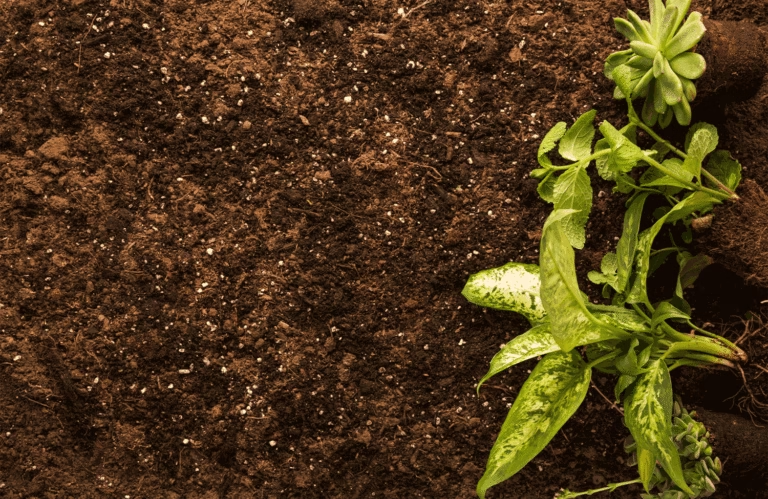
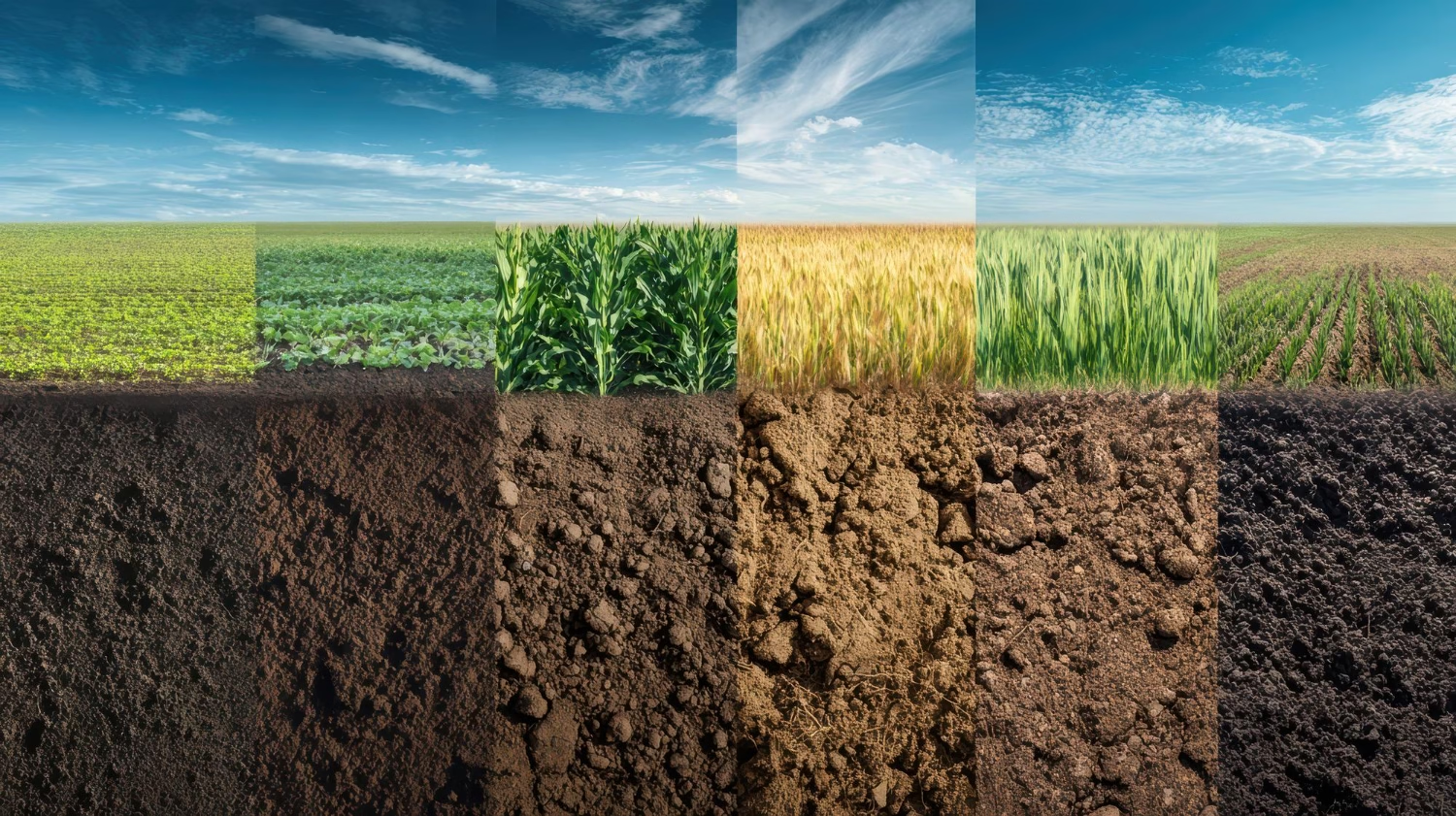
Recognizing healthy soil is both a science and an art. Experienced farmers and soil scientists can assess soil health through a combination of laboratory tests and simple field observations. Healthy soil has a distinctive dark, rich color, typically a deep brown or near-black shade, which signals the presence of organic matter known as humus. This organic matter is the decomposed remains of plants, animals, and microorganisms, and it is the cornerstone of soil fertility.
Texture is another telling indicator. Healthy soil is crumbly and loose, breaking into small aggregates when picked up rather than clumping into a dense, sticky mass or crumbling into dust. These aggregates, sometimes called “peds,” create a porous structure that allows water to infiltrate, air to circulate, and plant roots to penetrate deeply. Compacted soils, by contrast, resist root growth and prevent water from draining properly, leading to runoff and erosion.
Biological indicators are equally important. Healthy soil is alive. Earthworms are among the most visible signs of a thriving soil ecosystem. Their burrowing aerates the soil and their castings enrich it with nutrients. A diverse community of fungi, bacteria, protozoa, and nematodes works invisibly but continuously to break down organic matter, cycle nutrients, and suppress soil-borne diseases. Soils with low biological diversity tend to be less fertile, more prone to compaction, and more vulnerable to erosion. Smell, too, can be informative: truly healthy soil has a rich, earthy aroma produced by a compound called geosmin, which is released by actinobacteria, a sign that microbial life is abundant and active.
Why Plants Need Healthy Soil
Plants depend on soil for survival in three fundamental ways: as a source of nutrients, as a reservoir of water, and as a physical anchor for their root systems. Each of these functions is compromised when soil health deteriorates, with direct consequences for plant growth, crop yields, and ecosystem stability.
Nutrients are the chemical building blocks that plants need to grow, reproduce, and defend themselves against disease. The primary nutrients, nitrogen, phosphorus, and potassium, are found in soil in forms that plants can absorb through their roots. These nutrients are released through the activity of soil microorganisms, which break down organic matter and convert it into bioavailable compounds. In healthy soil, this process is continuous and self-renewing. When soil health declines and microbial communities are disrupted, this nutrient cycling slows, leaving plants malnourished even in fields that appear otherwise intact.
Water availability is equally critical. Soil acts as a sponge, holding water in pore spaces between soil particles and organic matter. The physical structure of healthy soil, those crumbly aggregates described earlier, is essential to this function. It allows water to enter the soil quickly during rain events and then releases it gradually to plant roots between rainfall. Compacted or degraded soils lose this capacity, becoming either waterlogged or drought-prone depending on conditions.
Finally, soil provides the physical structure that anchors plants and allows their root systems to develop fully. Deep, healthy soil with good structure enables roots to extend widely and deeply, accessing more water and nutrients and providing greater stability against wind and weather. Shallow or compacted soils force roots to remain near the surface, making plants more vulnerable to drought, nutrient deficiency, and physical damage.
How Soil Helps Feed the World
It is no exaggeration to say that civilization rests on the soil. Every loaf of bread, every bowl of rice, every glass of milk, every piece of fruit on a table, all of it begins in the ground. Approximately 95 percent of the world’s food is produced directly or indirectly from the soil. Farmers around the world depend on fertile soil to grow the grains, vegetables, legumes, and fodder crops that sustain both human populations and livestock. When soils are healthy, yields are higher, input costs are lower, and farming systems are more resilient. When soils degrade, the consequences ripple through food systems, economies, and communities.
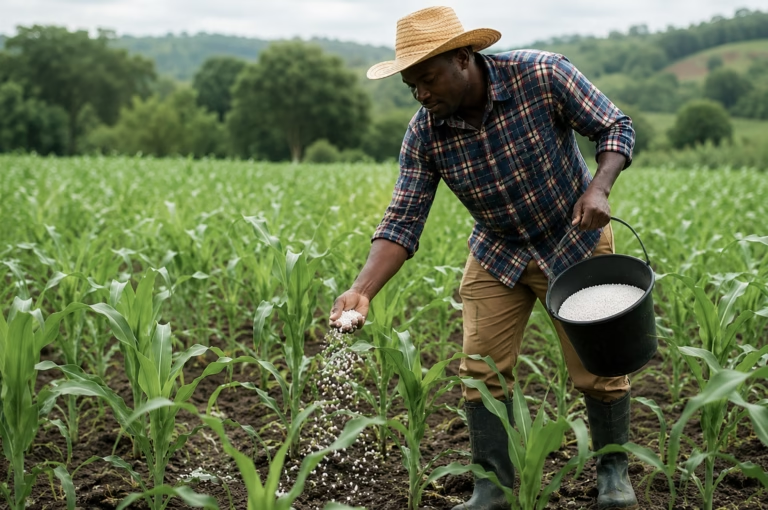
The relationship between soil health and food security is especially acute in regions that depend heavily on rain-fed agriculture. In sub-Saharan Africa, smallholder farmers cultivate soils that are often naturally low in organic matter and increasingly degraded by overuse. For these farmers, soil health is not an abstract environmental concern; it is the difference between feeding their families and going hungry.
What Can Harm Soil?
Despite its resilience, soil is surprisingly vulnerable. A range of human activities and natural processes can damage or weaken soil health, often in ways that take many years to repair. Understanding these threats is essential to protecting this valuable natural resource that supports food production, ecosystems, and livelihoods.
One of the most widespread threats to soil is erosion. When soil is left exposed without plants or crop cover, wind and rain can easily wash or blow away the topsoil, the most fertile and biologically active layer. Activities such as deforestation, overgrazing, and excessive tillage remove the protective vegetation that helps hold soil in place. In severe cases, erosion can strip away fertile land within a generation. Around the world, billions of tonnes of topsoil are lost each year, far faster than nature can rebuild it.
Pollution can also harm soil health. Industrial chemicals, heavy metals, and petroleum products may accumulate in soils, disturbing the natural balance of microorganisms that help keep soil productive. In some cases, contaminated soil can affect nearby water sources and reduce the land’s ability to support healthy plant growth for long periods.
Another common issue is soil compaction. Heavy farm machinery, construction equipment, and even the repeated movement of livestock can press soil particles tightly together. When soil becomes compacted, it loses the spaces that normally hold air and water. This makes it harder for plant roots to grow and reduces the number of beneficial organisms that live in the soil.
Salinization is another challenge in some parts of the world, particularly in dry regions where irrigation is used. When salty irrigation water evaporates, salts can remain behind in the soil. Over time, these salts may build up to levels that make it difficult for many crops to grow.
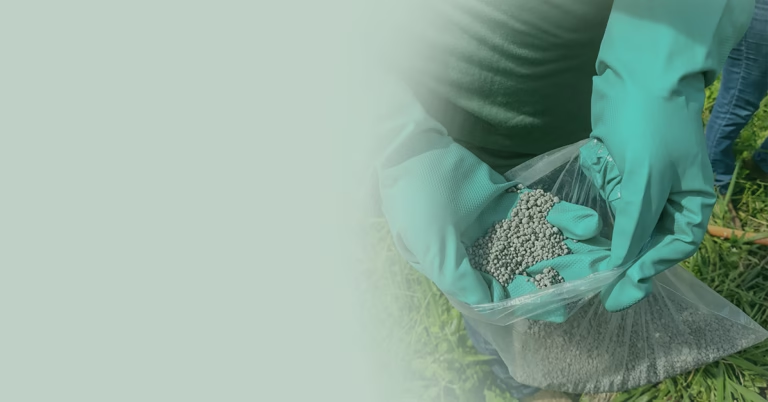
Continuous planting and harvesting without replenishing soil nutrients can gradually weaken soil health. Crops naturally absorb nutrients from the soil as they grow. If these nutrients are not returned through good soil management practices, the soil can become depleted and less productive over time. Restoring these nutrients is an important part of maintaining healthy soils and sustaining agricultural productivity.
Why Soil Health Matters for the Future
The urgency of protecting soil health in Africa cannot be overstated. According to the African Development Bank, an estimated 65% of Africa’s arable land is already degraded, affecting the productivity of millions of smallholder farmers across the continent. With Africa’s population projected to grow rapidly in the coming decades, maintaining healthy soils is essential not only for food production but also for economic stability and rural livelihoods. Institutions such as the Forum for Agricultural Research in Africa (FARA) continue to emphasize that restoring and sustainably managing soil resources will be critical to meeting the food and nutrition needs of Africa’s growing population. As population continues to rise, demand for food, water, and land will intensify, placing ever-greater pressure on an already-stressed resource. At the same time, climate change is altering rainfall patterns, increasing the frequency of extreme weather events, and accelerating desertification in many regions, all of which expedite soil degradation.
The connection between soil health and clean water is direct and profound. Healthy soils filter rainwater as it percolates through them, removing sediments, excess nutrients, and many pollutants before the water reaches rivers and aquifers. Degraded soils, by contrast, allow pollutants to pass through unfiltered or generate erosive runoff that carries sediments and chemicals into waterways. Protecting soil health is therefore inseparable from protecting freshwater resources.
Soils are also among the largest carbon stores on Earth, holding roughly three times more carbon than the atmosphere. When soils are healthy and rich in organic matter, they sequester carbon from the atmosphere, helping to moderate the greenhouse effect. When soils are degraded, through erosion, tillage, or bush burning, that carbon is released as carbon dioxide, contributing to climate change. Restoring degraded soils and managing healthy ones wisely represents one of the most powerful and cost-effective strategies available for climate mitigation.
For future generations to inherit a world with enough food, clean water, and a stable climate, protecting soil health must become a central priority in agriculture, urban planning, and environmental policy. This means supporting farmers who adopt regenerative practices, funding research into soil biology, restoring degraded land, and educating the public about the vital role soil plays in all of our lives. The ground beneath our feet is not passive or inert. It is alive, active, and essential, and its health is our responsibility.
How do we sustain and restore the soils upon which we depend?