
Introduction
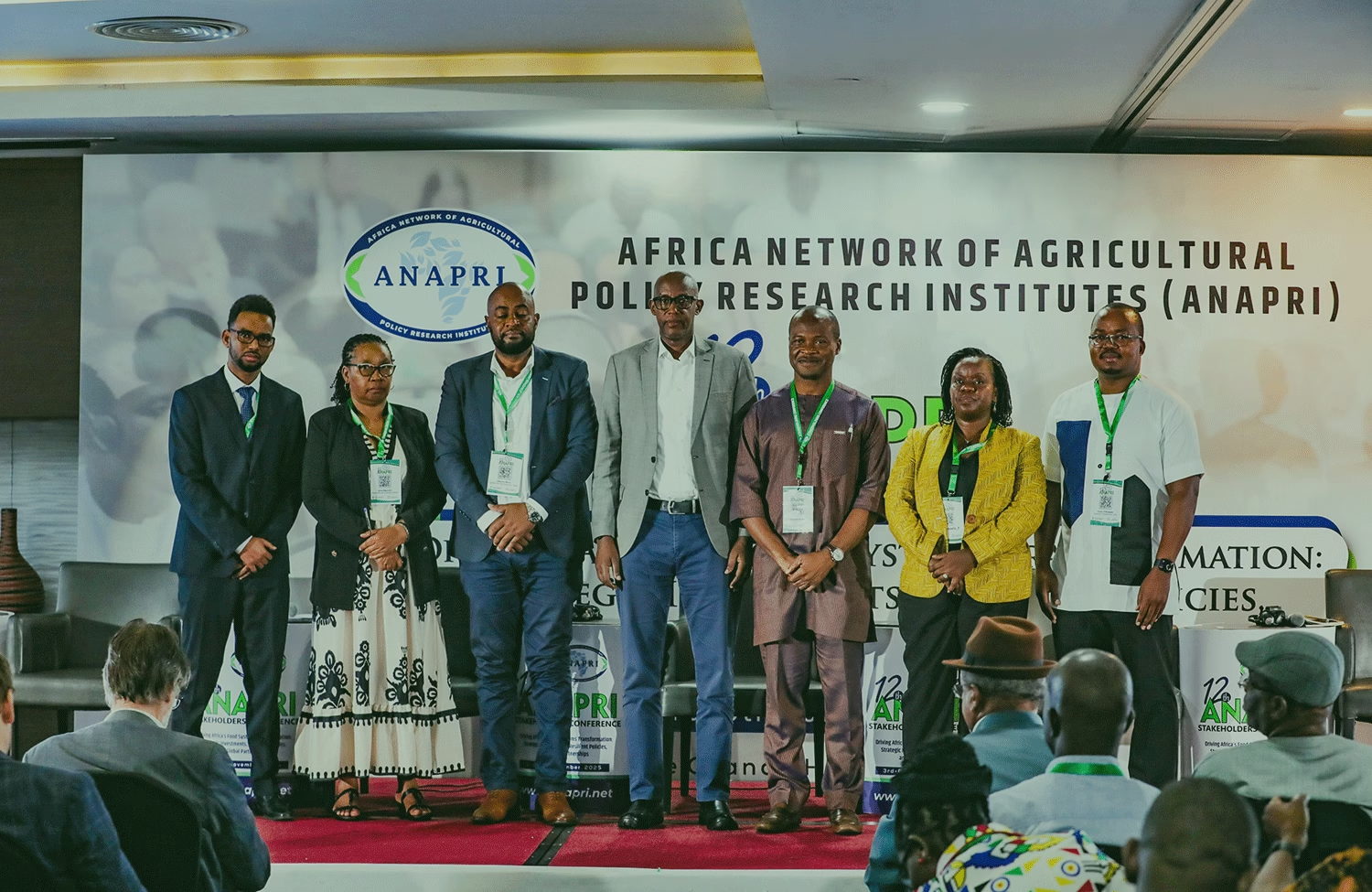
In a landmark moment for Africa’s agrifood transformation, the Africa Fertilizer Industry Development Association (AFIDA) and the Africa Network of Agricultural Policy Research Institutes (ANAPRI) formally cemented a partnership by signing a Memorandum of Understanding (MoU) in Kigali, Rwanda, on November 6, 2025. The agreement, inked at the closing session of the 12th Annual ANAPRI Stakeholders Conference, marks a deepening collaboration between the fertilizer industry and agricultural policy research institutions to accelerate evidence-based policies and actionable solutions across the continent’s agricultural sector.
A Strategic Partnership at a Pivotal Forum
The MoU signing took place against the backdrop of the ANAPRI Stakeholders Conference (Nov 4–6) hosted by the Economic Policy Research Network.
The conference brought renewed focus to the role of innovation-driven partnerships in enhancing policy relevance and implementation effectiveness, setting the stage for AFIDA’s engagement with ANAPRI.
Why the AFIDA–ANAPRI MoU Matters
Bridging Evidence, Policy Reform, and Industry Action
Africa’s agricultural transformation depends on more than sound policy — it requires evidence-based strategies, strong networks of policy research institutes, and coordinated industry action to ensure sustainably healthy soils and a food-secure, prosperous population. The AFIDA–ANAPRI partnership brings together AFIDA’s pan-African fertilizer industry insights and ANAPRI’s robust policy research expertise to convert data and analysis into actionable solutions that benefit both farmers and markets.
Through this collaboration, research evidence is linked directly to policy advocacy and reform, focusing on improving fertilizer subsidy programs to reduce market distortions, facilitate trade across regions, and ensure equitable access to quality inputs. By aligning public research with private sector expertise, the partnership supports context-specific strategies that strengthen soil health, enhance subsidy efficiency, and promote sustainable agricultural practices across Africa.
Joint Collaboration to Drive Policy Impact and Farm-Level Outcomes
Under the Memorandum of Understanding, AFIDA and ANAPRI will work together to:
- Leverage networks of policy research institutes to generate evidence on fertilizer policy performance, subsidy effectiveness, market trends, and soil nutrient management across African regions.
- Advance policy advocacy and reform, particularly improving subsidy programs and facilitating cross-border fertilizer trade, to reduce market distortions and create more enabling environments for farmers and industry alike.
- Strengthen farmer-level knowledge and stewardship through initiatives like the Farmer Know Your Soil campaign, helping farmers understand their soils, select the right fertilizers, and apply them effectively to increase productivity, profitability, and sustainability.
- Build capacity among policymakers and stakeholders by equipping them with a deeper understanding of fertilizer science, promoting accurate public information, and fostering evidence-informed decision-making.
- Share knowledge and best practices via policy dialogues, workshops, and co-authored publications for industry leaders, extension actors, governments, and development partners.
Translating Evidence into Healthy Soils and Prosperous Communities
By integrating research, industry experience, and practical insights from farmers, the AFIDA–ANAPRI partnership seeks to close the gap between policy intent and real-world implementation. The collaboration supports smarter fertilizer policies, more effective subsidy frameworks, and informed soil management at farm level — ensuring that planting decisions contribute to sustainably healthy soils, improved productivity, and a more food-secure and prosperous population.
Implications for Africa’s Agricultural Landscape
The AFIDA–ANAPRI partnership aligns with continental priorities such as the Africa Fertilizer and Soil Health Action Plan, while supporting broader objectives on food security, rural development, and economic growth. By connecting research networks with industry expertise, the partnership strengthens the integration of evidence, policy reform, and practical implementation.
Through this approach, the collaboration is positioned to drive:
- Stronger fertilizer and soil health policies that reflect rigorous research, market realities, and the needs of farmers.
- More efficient and equitable fertilizer subsidy programs, designed to reduce distortions, improve targeting, and support cross-border trade and sustainable markets.
- Effective public–private dialogue, enabling coordinated reform efforts and consistent implementation of agricultural interventions.
- Enhanced capacity and stewardship, empowering policymakers, industry actors, and extension systems to co-design solutions, educate farmers, and promote sustainable soil management practices.
By translating research into actionable policy and practice, the AFIDA–ANAPRI alliance presents a scalable model for cross-sector collaboration that benefits farmers, markets, and the broader African population.
Looking Ahead
As AFIDA and ANAPRI move from agreement to implementation, the focus will be on how evidence, policy reform, and industry action translate into measurable outcomes. The partnership’s success will depend on the active mobilization of research networks, the delivery of actionable insights, and sustained engagement with governments, regional bodies, development partners, and farmer-facing institutions.
By grounding reform efforts in data, market realities, and farmer needs, the collaboration can influence fertilizer policy and subsidy design, enhance soil health management, and expand the reach of initiatives like the Farmer Know Your Soil campaign. Coordinated advocacy, capacity building, and stewardship efforts will ensure that policies lead to better farm-level practices and tangible improvements in productivity, profitability, and sustainability.
Together, AFIDA and ANAPRI are poised to help Africa achieve sustainably healthy soils, a food-secure population, and a prosperous agricultural sector, demonstrating how evidence-driven collaboration can turn policy into real impact.
Conclusion
The AFIDA–ANAPRI Memorandum of Understanding, signed in Kigali during one of Africa’s foremost agricultural policy gatherings, marks a clear commitment to move from ideas to action. By combining fertilizer industry expertise with networks of policy research institutes, the partnership offers a practical pathway to implement feasible and sustainable policy reform, strengthen fertilizer subsidy programs, and improve farmer knowledge and stewardship.
With a shared focus on sustainably healthy soils and a food-secure, prosperous population, AFIDA and ANAPRI are set to drive reforms and initiatives that will make agriculture more productive, profitable, and sustainable across Africa. The time to act was yesterday, but we still have the advantage now.